
Swastik Ceramic Hanging Bell: Vastu & Decor Tips
Discover optimal Vastu placement and home decor styling for the handcrafted 4-inch Swastik ceramic hanging bell. Explore Krishna Ceramics today.
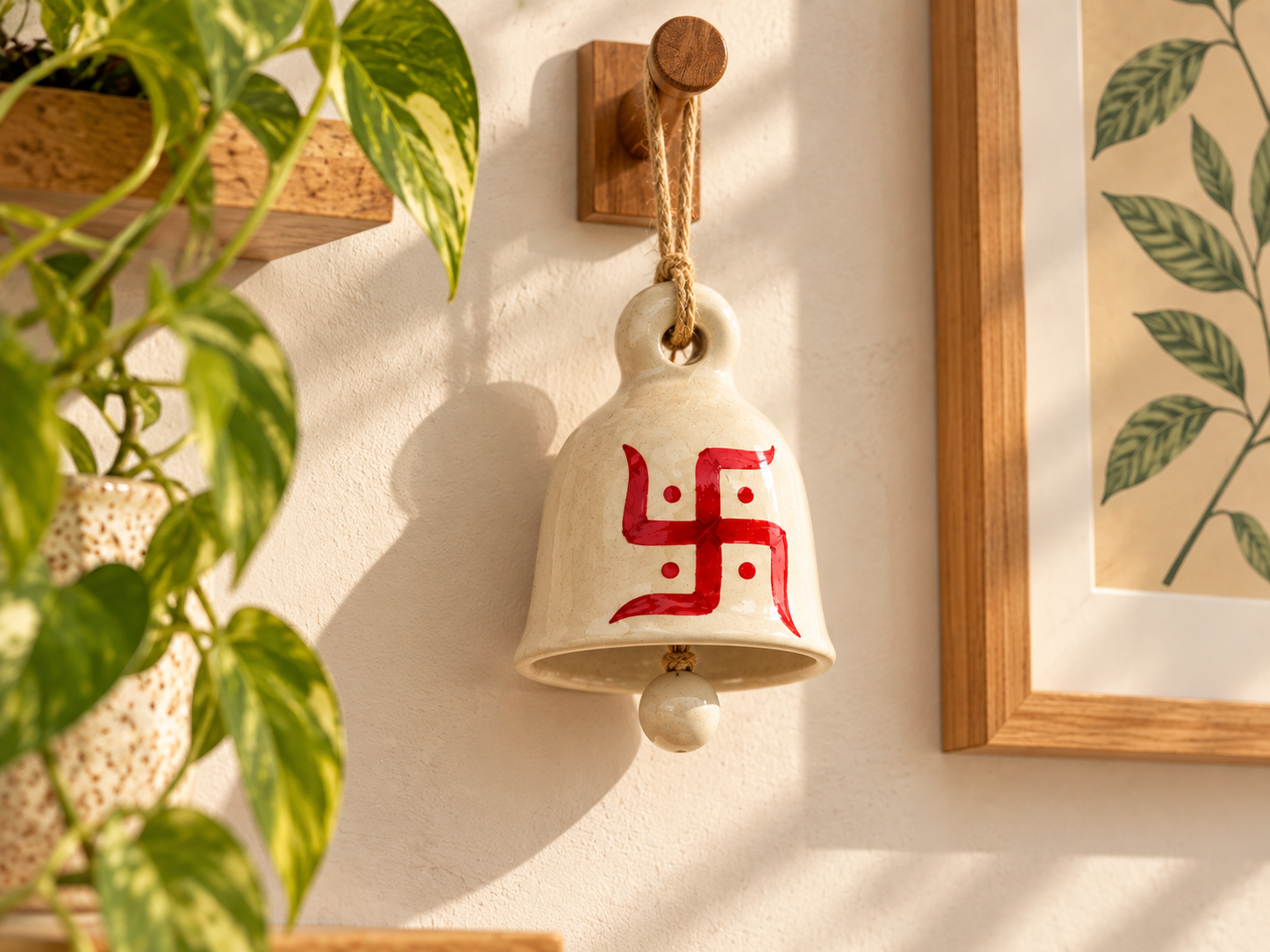
Key Takeaways & Quick Placement Summary
- Ideal Direction: Hang your ceramic Swastik bell at the North, East, or North-East entrance to invite auspicious energy.
- Acoustic Quality: High-fired earthenware provides a mellow, soothing chime rather than the harsh clang of thin sheet metal.
- Sacred Geometry: The red hand-painted Swastik symbolizes wellbeing, prosperity, and cosmic balance in Indian tradition.
- Gentle Maintenance: Wipe with a soft microfiber cloth; avoid abrasive wire brushes to safeguard the handcrafted glaze.
The entrance of an Indian home serves as more than just a physical threshold—it is the gateway through which energy, guests, and everyday blessings flow. When welcoming family or celebrating auspicious occasions, hanging an ornament imbued with sacred geometry creates a serene, grounded atmosphere. The Auspicious Swastik Hand-Painted Red 4-Inch Ceramic Hanging Bell from Krishna Ceramics brings together the storied pottery heritage of Khurja and timeless Hindu symbolism to elevate your doorway or mandir.
Unlike mass-produced metallic bells that can feel harsh or industrial, a studio-crafted ceramic bell delivers visual warmth and an earthy, organic resonance. In this comprehensive guide, we examine the traditional significance of the Swastik motif, explore recommended Vastu Shastra placement rules, and share practical styling advice for pooja rooms, balconies, and festive entryways.
The Sacred Meaning of the Swastik Motif in Home Decor
In Sanskrit, the word Swastika derives from su (good) and asti (being), embodying the timeless wish for welfare, fortune, and harmony. When depicted in sacred red vermilion against a clean cream-white ceramic base, the four arms represent the four cardinal directions, the four Vedas, and the four primary goals of human life: Dharma, Artha, Kama, and Moksha.
Incorporating a ceramic hanging bell bearing this sacred emblem establishes an immediate aura of sanctity. Because terracotta and clay have deep spiritual roots in Indian rituals, glazed ceramic accessories harmonize naturally with brass diyas, marigold garlands, and carved wooden temple shrines.
Recommended Vastu Placement for Your Ceramic Bell
Vastu Shastra places paramount importance on the flow of positive vibrations (prana) throughout the living space. Positioning sacred decorative pieces in alignment with directional energies maximizes their harmonious influence:
- Main Entrance Doorway: Fasten the bell above or adjacent to the front door, ideally in the North or East quadrant. As the door opens, the gentle motion stirs stagnant air and ushers in positive movement.
- Pooja Room & Home Mandir: Suspend the bell near the temple archway or adjacent to prayer shelving. The clean red-on-white contrast complements traditional marble and teakwood mandirs.
- Balcony or Covered Patio: When hung in a sheltered balcony breeze corner, the bell catches passing zephyrs, generating occasional soft chimes that calm the senses during morning tea or meditation.
- Foyer & Transition Passages: Narrow hallways often suffer from poor air circulation; a 4-inch decorative bell draws the eye upward and breaks visual monotony.
| Location | Vastu Suitability | Visual Benefit | Styling Recommendation |
|---|---|---|---|
| Main Door Frame | Highly Auspicious (North/East) | Welcoming focal point for guests | Pair with a fresh toran or brass nameplate |
| Pooja Mandir Corner | Ideal (North-East Ishanya) | Adds vertical dimension to shrine | Hang beside bell sets and brass oil lamps |
| Balcony Railing / Ceiling | Favorable for air movement | Cottagecore garden accent | Cluster near hanging ferns and clay planters |
| Study or Work Nook | Neutral / Calming | Minimalist spiritual touch | Suspend from floating shelves or curtain rods |
Ceramic Bells vs Brass Bells: Which Fits Your Space?
While heavy brass bells have long been fixtures in community temples, modern residential interiors often benefit from the gentle texture and understated elegance of ceramics. Solid brass produces a sharp, piercing ring designed to pierce through temple chatter. In contrast, the internal clapper of a 4-inch ceramic bell yields a muted, rounded chime that delights without overwhelming quiet indoor spaces or startling sleeping pets.
Furthermore, ceramic glazes do not tarnish or oxidize. Traditional brass requires regular polishing with lemon or tamarind paste to remove dark patinas. A glazed ceramic bell retains its pristine cream-and-red luster indefinitely with nothing more than a damp cloth, making it significantly easier to maintain during busy festive weeks.
Styling Ideas for Festivals and Everyday Hospitality
Whether preparing for Diwali, Navratri, or welcoming loved ones to a housewarming (Griha Pravesh), small artisanal details make an unforgettable impression. Consider these styling arrangements:
1. Festive Entrance Toran Pairing
Thread the bell’s included red hanging ribbon through a mango-leaf or marigold-flower toran across your front lintel. The glossy ceramic surface catches ambient fairy lights, creating a warm, inviting glow that signals festive cheer.
2. Multi-Bell Harmony
Create a staggered vertical display by pairing this piece with complementary motifs from our collection, such as the Bird & Floral Hand-Painted Bell Set or the Blue & Green Floral Bell Set. Grouping bells of varying heights adds dynamic visual texture to verandah pillars or gallery walls.
3. Thoughtful Return Gifting
Finding a meaningful gift that feels personal without being exorbitant can be challenging. Because this bell is handcrafted by skilled artisans in Khurja, it serves as an authentic piece of Indian studio craft—making it a deeply appreciated favor for weddings, puja gatherings, and Diwali gift hampers.
Care and Cleaning for Handcrafted Glazed Ceramics
To ensure your handcrafted bell preserves its vivid colors and glossy finish for years to come, observe these straightforward care practices:
- Dusting: Dust weekly using a dry, soft microfiber cloth or feather duster.
- Washing: If outdoor dust accumulates, wipe with a sponge moistened in lukewarm water and mild dish soap. Dry immediately with a clean cotton towel.
- Avoid Scouring: Never use steel wool, abrasive scouring powders, or harsh chemical detergents, as these can dull the protective clear overglaze.
- Weather Protection: While high-fired ceramic withstands moderate humidity, bring bells indoors during intense monsoon storms or hail to prevent impacts against masonry.
Featured Product: Auspicious Swastik 4-Inch Ceramic Bell
Handcrafted in Khurja, Uttar Pradesh with durable glossy glaze, traditional red detailing, and decorative red hanging ribbon. Ideal for mandir, door frames, and festive gifting.
Frequently Asked Questions
Where is the best place to hang a Swastik ceramic bell according to Vastu?
The most auspicious locations are the main entrance doorway facing North or East, and the North-East corner of your pooja room. Hanging it at eye level or slightly above allows positive energy to circulate freely while keeping the motif respectfully elevated.
Does this ceramic bell make a loud ringing sound?
No. Because it is crafted from high-fired pottery with a ceramic clapper, it emits a soft, gentle chime rather than the loud, echoing reverberation of metallic temple bells. It is designed primarily as aesthetic and spiritual decor.
Can this bell be hung in an outdoor garden or balcony?
Yes, provided it is hung in a covered balcony or veranda shielded from direct high-velocity winds that might swing it violently into hard walls. Ceramics tolerate ambient weather well when shielded from severe physical impact.
How is each bell handcrafted?
Each piece is individually molded, dried, bisque-fired, hand-painted with ceramic pigments by local artisans in Khurja, and fired a second time at high temperatures to seal the glossy protective glaze permanently.
Written by: Krishna Ceramics Editorial Team — Khurja, Uttar Pradesh. Dedicated to preserving authentic Indian ceramic heritage, sustainable home decor, and practical living guides for modern homeowners.