
Crimson Bloom Ceramic Canister: Elegant Countertop Decor
Discover the crimson bloom ceramic kitchen canister from Krishna Ceramics. Explore styling ideas, durable glaze care, and authentic Khurja pottery...
Key Takeaways & Pickle Storage Summary
- Traditional Achar & Chutney Preservation: Vitrified ceramic is impervious to pungent mustard oil, raw mango acids, and spicy brine.
- Bold Crimson Floral Brushwork: Striking ruby red floral motifs bring celebratory festive energy to dining tables and credenzas.
- Ideal 450 ml Capacity: Perfectly sized for family batches of homemade mango, lemon, or mixed vegetable pickle.
- Odor-Resistant Glaze: Cleans completely with mild soap, leaving zero residual vinegar or garlic aromas.
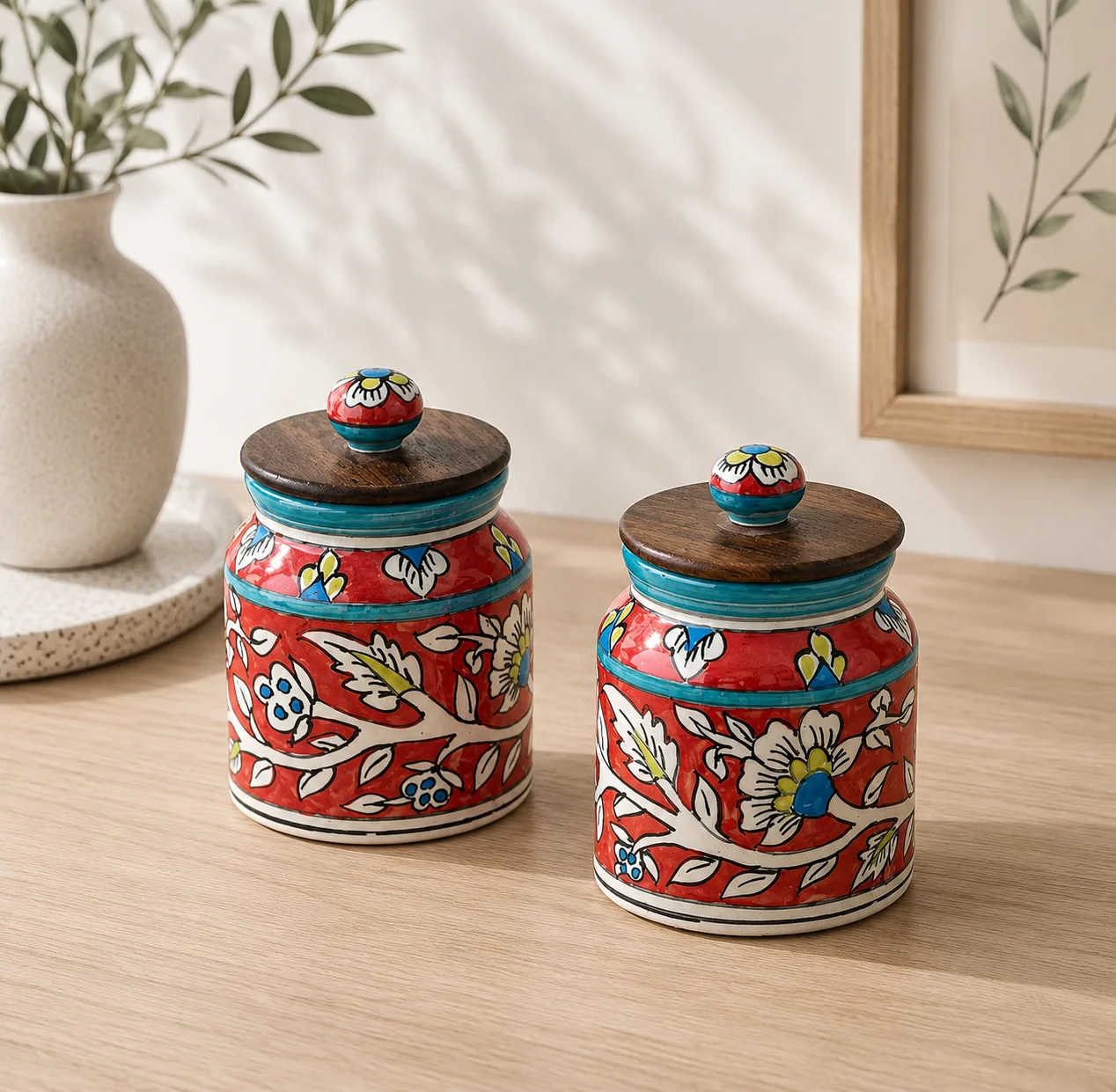
In Indian culinary tradition, the ceramic pickle jar (or martaban) holds a revered place. For centuries, grandmothers stored slow-fermenting mango achars, lemon preserves, and spiced chillies in heavy glazed ceramic crocks placed under sunny verandahs. The natural cooling properties and acid resistance of stoneware made it the only material trusted for long-term food preservation. The Crimson Bloom Handpainted 450 ml Ceramic Kitchen Storage Jar from Krishna Ceramics revives this storied heritage with contemporary tabletop elegance.
Measuring 450 ml, this canister is designed to hold everyday quantities of homemade pickles, spicy chutneys, or dry savory snacks. Vitrified at high temperatures surpassing 1150°C, the glossy ceramic glaze repels acids and pungent oils. In this guide, we discuss traditional Indian pickle preservation, explore festive dining table styling, compare ceramic crocks against plastic jars, and provide cleaning routines.
The Fermentation Science: Why Stoneware is the Gold Standard for Pickles
Pickle making is an ancient biochemical process reliant on salt, mustard oil, and natural fruit acids to preserve food safely without artificial chemical preservatives. However, these highly acidic environments quickly react with metallic containers, causing toxic oxidation and spoiling the batch. Plastic jars are equally problematic because volatile mustard oil compounds penetrate soft plastic polymers, causing discoloration, cloudiness, and rancid grease retention.
High-fired stoneware is non-porous and chemically inert. The silica glaze forms a glass-like barrier that neither interacts with intense lemon juice and vinegar nor absorbs pungent garlic and fenugreek oils. A jar of spicy green chilli pickle stored in this canister maintains its crisp texture and authentic flavor throughout the year. When empty, a simple wash restores the jar to pristine freshness, ready for dry tea or sugar with zero odor memory.
| Vessel Material | Acid & Salt Resistance | Odor Absorption | Fermentation Longevity |
|---|---|---|---|
| Vitrified Ceramic Martaban | 100% Non-reactive to citrus & vinegar acids | Zero (Non-porous glaze washes completely clean) | Years; traditional gold standard |
| Standard Plastic Tub | Oils leach into plastic; clouding & yellowing | High; permanently retains pungent pickle smells | Poor; degrades after several months |
| Stainless Steel Canister | Salt brine causes pitting & metallic taste | Low, but acids react with base metal | Unsuitable for high-acid traditional achars |
What to Store: From Pungent Achars to Festive Sweets
The 450 ml volume makes this canister exceptionally versatile for both kitchen prep and table service:
- Traditional Indian Achars: Perfect for mango avakaya, sweet-and-sour lime pickle, or pungent stuffed red chilli pickle.
- Fresh Table Chutneys: Serve cooling mint-coriander chutney or sweet tamarind sauce directly at the center of festive feast tables.
- Festive Dry Fruits: Keep roasted salted cashews, California almonds, or plump Afghan raisins ready for visitors.
- South Indian Podis: Store aromatic gun powder podi or curry leaf powder dry and fresh for breakfast idlis and dosas.
Dining Table Styling: Crimson Warmth for Festive Feasts
The vibrant handpainted crimson blossoms inject immediate warmth and celebratory energy into dining settings. Here is how to style this piece:
Place this canister at the center of your dining table upon a brass or copper charger plate during festival dinners like Diwali, Eid, or family Sunday lunches. The vivid red glaze harmonizes beautifully with rich curries, basmati biryani, and warm rotis. When paired with traditional brass cutlery and crisp cream table linens, it creates an unforgettable dining atmosphere that celebrates Indian hospitality.
The Chemistry of Traditional Indian Pickling: Acid, Salt & Glaze Invariance
Traditional Indian achar preservation is an intricate biochemical art that relies heavily on raw mango acids, rock salt brine, and pungent cold-pressed mustard oil to inhibit bacterial growth naturally. However, this potent acidic environment poses severe hazards to modern kitchen containers. Synthetic plastic polymers gradually leach plasticizers and absorb grease films that turn cloudy, while stainless steel canisters develop pitting corrosion from high salinity.
Vitrified ceramic martabans have remained the gold standard for pickling across centuries because fused silica glass is chemically unreactive. Fired at intense temperatures surpassing 1150°C, the glossy mineral glaze will never react with citric acid, lactic ferments, or pungent garlic cloves. Storing your family's treasured heirloom achars in this crimson bloom jar guarantees complete purity, keeping the pickle crisp, spicy, and safe through every season.
Caring for Your Crimson Ceramic Jar
Preserve the brilliant red glaze and hygienic freshness with these simple practices:
- Hand Washing Recommended: Wash with warm water, mild liquid dish detergent, and a soft yellow sponge. Avoid steel wool scourers.
- De-odorizing Rinse: After finishing a pungent garlic pickle, swirl warm water with a teaspoon of white vinegar or lemon juice inside the jar to neutralize scents instantly.
- Handle with Care: Take care when replacing the ceramic lid on dining tables to prevent chipping along the inner rim.
- Safe Stacking: Store on sturdy pantry shelves with adequate clearance.
Featured Tableware: Crimson Bloom Handpainted 450 ml Ceramic Kitchen Storage Jar
Handcrafted in Khurja, Uttar Pradesh with high-fire vitreous glaze, handpainted crimson floral artwork, and versatile 450 ml capacity. Explore complete details at Krishna Ceramics.
Frequently Asked Questions
Can this jar hold traditional oily mango pickle without leaking?
Yes. The vitrified stoneware body is completely non-porous. Mustard oil, salt brine, and spice oils will never seep through the ceramic walls.
Will turmeric in pickles stain the inside of this white jar?
No. Fired at 1150°C, the glaze forms an impermeable vitreous barrier. Turmeric cannot penetrate the glaze and washes off effortlessly with warm soapy water.
Is this jar microwave-friendly?
Yes, high-fired stoneware is fully microwave-safe if you ever need to warm stored contents or syrups.
Where is this jar made?
Every piece is hand-shaped and decorated by studio pottery artisans in Khurja, Uttar Pradesh, preserving traditional Indian ceramic heritage.
Written by: Krishna Ceramics Editorial Team — Khurja, Uttar Pradesh. Honoring traditional Indian culinary arts, food preservation, and artisanal home living.